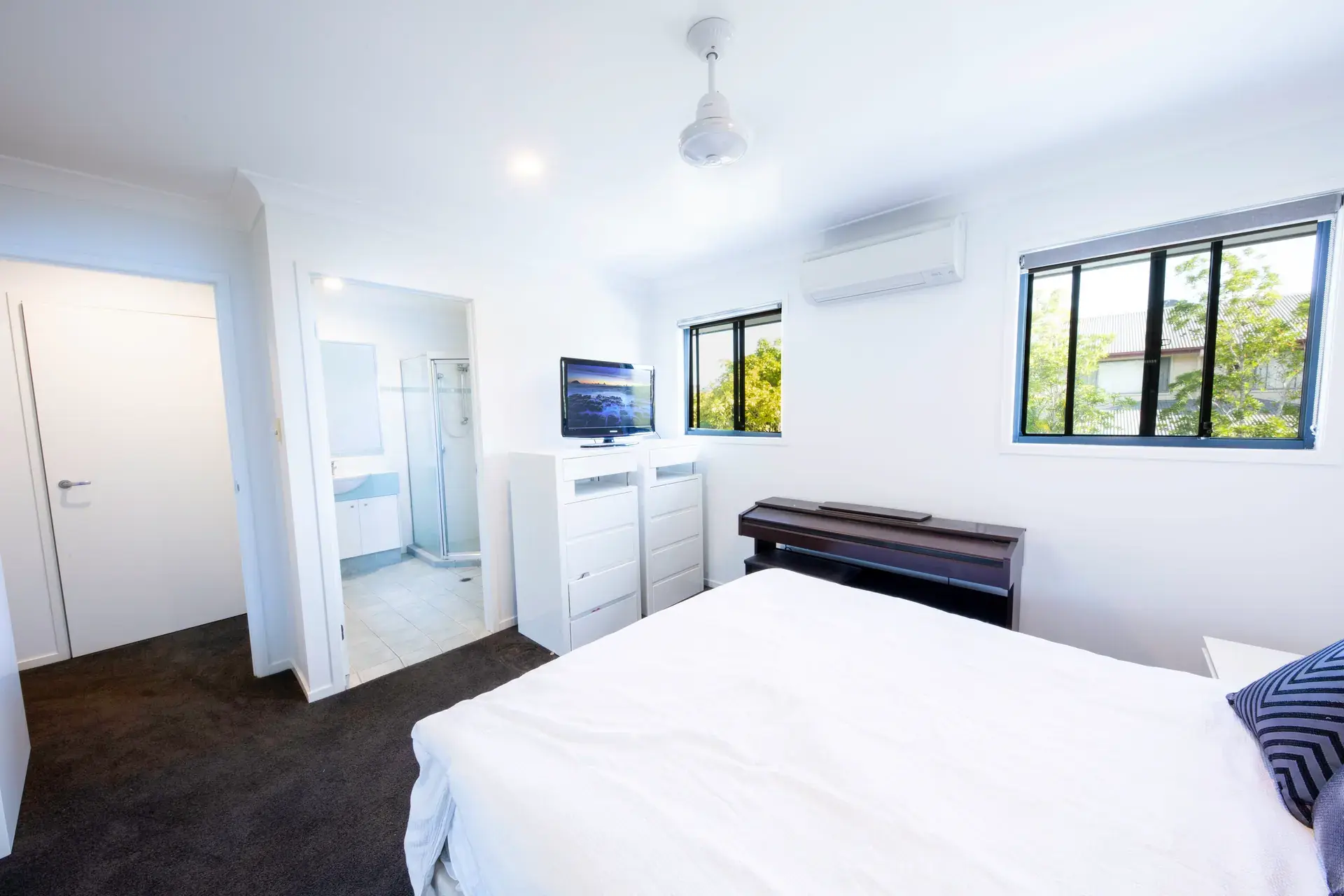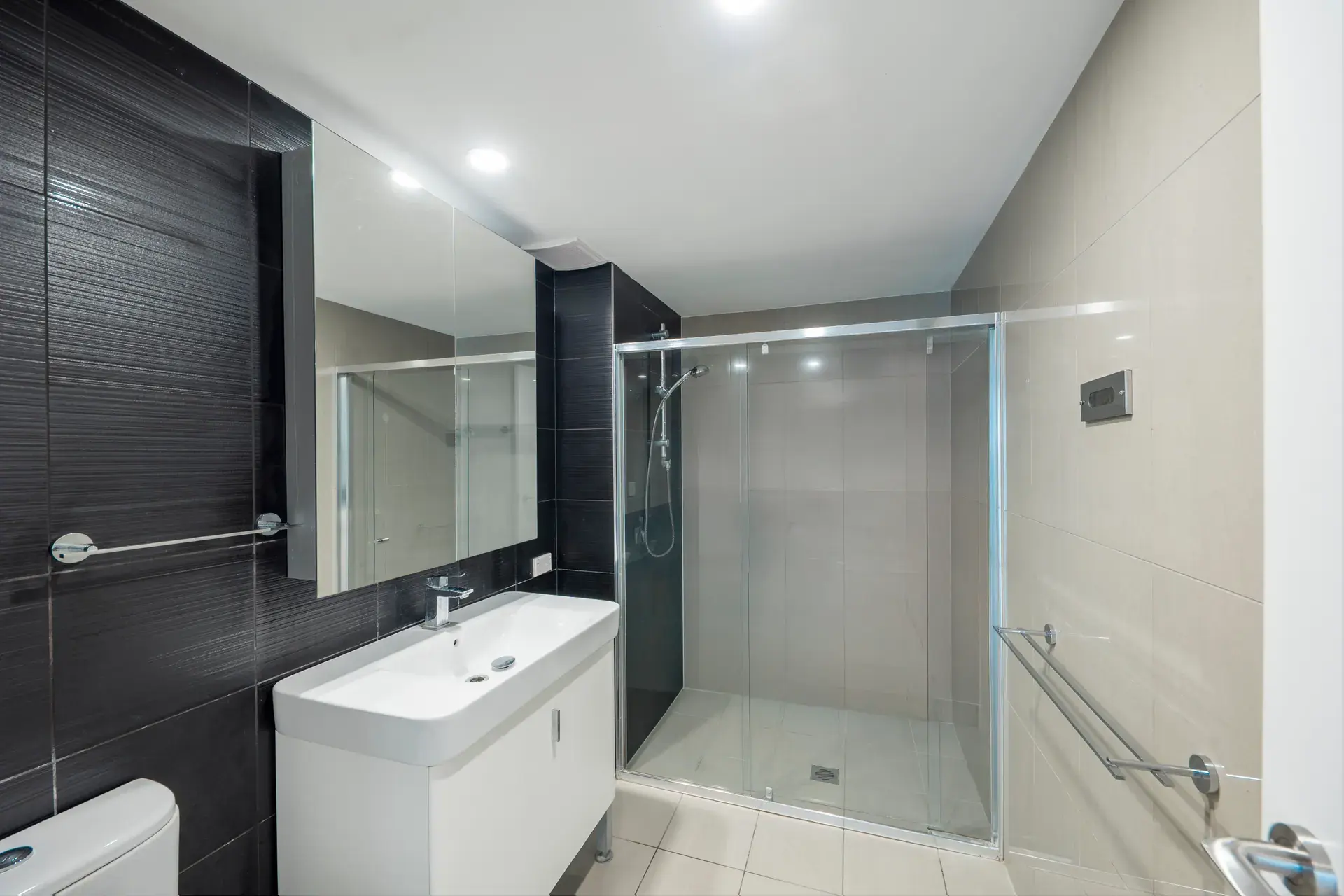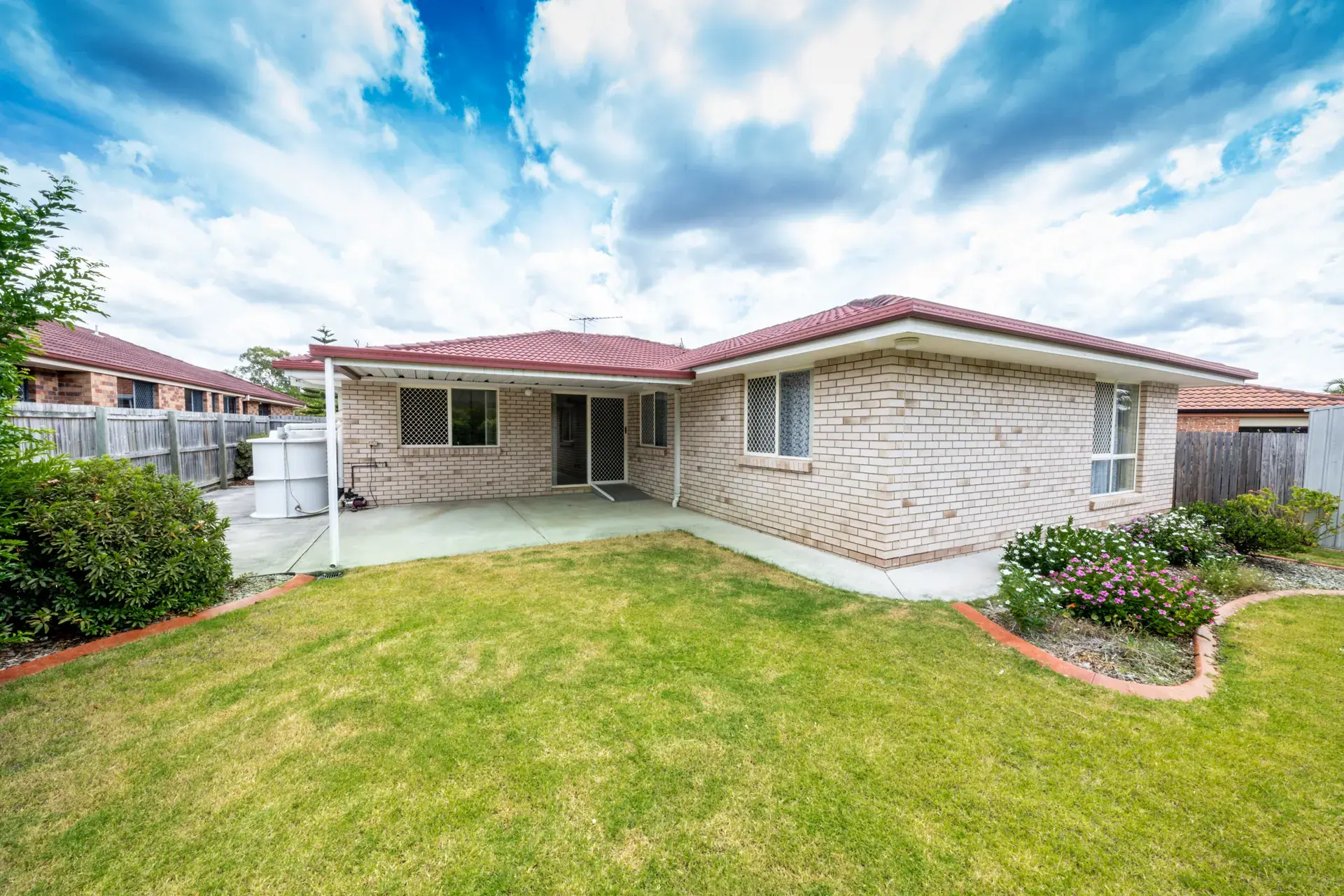
A fresh Brisbane listing set is $220 for fifteen fully edited images, delivered the same day. That is the number every rebuild decision has to be measured against, and it is lower than most agencies assume when they start looking at their archive.
There are still plenty of situations where the archive is the right answer. Tenanted properties where access takes three weeks to arrange. Rental stock that will never justify a shoot. A re-listing of a home you photographed fourteen months ago that has not changed a hinge since. In those cases, rebuilding what you already own (decluttered, restaged, corrected, redrawn) is faster and cheaper than sending anyone out.
The trick is knowing which situation you are in before you commit.
What a rebuild genuinely does
Working from your existing files, a re-creation pass can remove clutter from benches and floors, digitally furnish empty rooms, correct verticals and white balance, replace a dull sky, repair a tired lawn, take out a pool cleaner or a bin or a photographer in a mirror, and export the result at portal specification. Floor plans can be redrawn from an old scan, a builder's drawing or a photograph of a printed plan into a clean, consistent agency-branded asset.
That is a genuinely useful set of capabilities and it covers a large share of what is wrong with most agency libraries.
What it does not do
It does not move the camera.
This is the constraint everything else follows from. If the original photographer stood in the doorway of the main living area instead of in the far corner, the room reads narrow in every version of that file, forever. If the hero exterior was shot at the wrong end of the driveway so the garage dominates, a new sky does not fix the composition. It just gives you a better sky above the same mistake.
Nor can it reveal a room that was never photographed, restore detail that low-resolution files never held, or produce an honest image of a kitchen that has since been renovated.
Three tests
Test one: the angle test
Open the existing set and look only at where the camera was standing. Ignore the clutter, the light and the sky. All of that is fixable.
Ask whether each frame is shot from the position you would choose today. In practice this means: is the widest dimension of the room running across the frame, are the verticals recoverable, and can you see the connection between spaces rather than one wall.
If the answer is yes for most frames, rebuild. If it is no for the hero exterior or the main living space, reshoot. Those two images carry the click-through, and they are the two least forgiving of a compromised angle.
Test two: the coverage test
Count the rooms on the floor plan. Count the rooms in the library. Write both numbers down.
Any gap is a reshoot, because there is nothing to rebuild from. This sounds obvious and it is the test most often skipped, usually because a library of thirty files feels comprehensive until somebody notices the second bathroom and the study were never shot.
The same applies to the outdoor spaces, which are chronically under-photographed in Brisbane archives. Covered patios, pool surrounds and side access are exactly the areas buyers ask about here, and exactly the ones missing from a twelve-image set.
Test three: the truth test
Has the property physically changed since the files were made?
New kitchen, new floors, a deck added, landscaping matured, a fence replaced, a development gone up next door. Any one of those means the existing library shows a property that no longer exists, and rebuilding it produces a polished, portal-ready misrepresentation. That is worse than a grey sky.
Age alone is a reasonable proxy. Inside twelve months, a library is usually still true. Past two years, assume something has moved and check before you rely on it.
The disclosure line
Decluttering a bench, correcting a leaning wall and replacing an overcast sky are presentation. Removing a neighbouring building, inventing a view, taking out visible damage or digitally erasing a structural feature is something else, and a buyer standing in the room will know within four seconds.
Virtual staging carries the clearest convention: furniture that is not there should be labelled as virtually staged, in the listing, every time. Where the legal line sits under Australian Consumer Law and current REIQ guidance is a conversation for your principal, and it does move. Where the practical line sits is simpler and has not moved at all: if the buyer would feel misled standing in the room, do not do it, and no discussion about the state of the technology changes that.
Our own in-house virtual staging is $85 per image and is disclosed as staging on every listing that uses it. Disclosing it is what keeps the tool usable.
What a redrawn floor plan can and cannot fix
Can fix: legibility, inconsistency across an agency's stock, wrong or missing room labels, a hand-drawn or scanned plan that looks like a fax, orientation, north arrows, and the general problem of a plan that was drawn for a builder rather than a buyer.
Cannot fix: the absence of measurements. If the source plan carries no dimensions, a redraw produces a drawing that is proportionally plausible and dimensionally unverified. It will look authoritative, which is the danger. Only quote areas and room dimensions from a measured source, and if there is not one, commission a measured plan rather than dressing up a guess.
A fresh measured floor plan is $180 for homes up to 150 m² and $280 from 150 to 300 m², with anything larger quoted on the plan. On a listing where the layout is the selling point, that is not the place to economise.
The arithmetic
Work out the per-image rebuild cost. Multiply it by the number of images the campaign actually needs, not the number in the archive but the number going on the portal. Compare that to $220 for fifteen fully edited images delivered same day, or $350 for twenty-five.
If the rebuild total lands above the shoot, the decision has made itself. If it lands well below and all three tests passed, rebuild and put the saving into a floor plan.
Where the archive genuinely is enough, Pixestate is our sister studio and does exactly this work: image re-creation and floor plan rebuilds from existing libraries. Where it is not, the shoot pricing is here and the calendar is usually open inside a week.