Almost every couple says a version of the same sentence on the consultation call. We are not photogenic. We hate having our photo taken. We do not know what to do with our hands.
It is so close to universal that the couples who claim to be comfortable in front of a camera are the unusual ones. So this is not a personal failing you need to fix before your wedding. It is the ordinary starting position, and most of the work of a portrait set is getting past it.
Nobody can follow the instruction "look natural"
It is an impossible direction. Natural is what a face does when it is not being watched, so the moment you try to produce it deliberately you are doing the opposite of the thing asked for. The same goes for "relax", "act normal" and "just be yourselves".
What works instead is indirect. Give somebody a task and their body sorts itself out while they are busy. Give them someone to talk to and their face does something a camera cannot manufacture. Nearly everything below is a version of that one idea.
The first ten minutes are the worst, and they are meant to be
When the portraits start you will feel watched, you will not know where to look, and you will be very aware of your own arms. That lasts about ten minutes.
Those frames are the warm-up. Very few of them are ever used, and knowing that in advance takes some of the pressure out of them. The mistake is trying to skip the warm-up to save time, because the stiffness does not disappear, it just relocates into the photographs you were planning to hang on a wall.
Plan for it rather than fight it. If your run sheet gives the portraits twenty minutes with no slack, the first half of that is warm-up and the second half is the whole session. Every move between locations costs twenty to thirty minutes on top, which is usually where the time went.
Movement beats standing still
A person standing still and being photographed has nothing to do except be photographed. A person walking has somewhere to be.
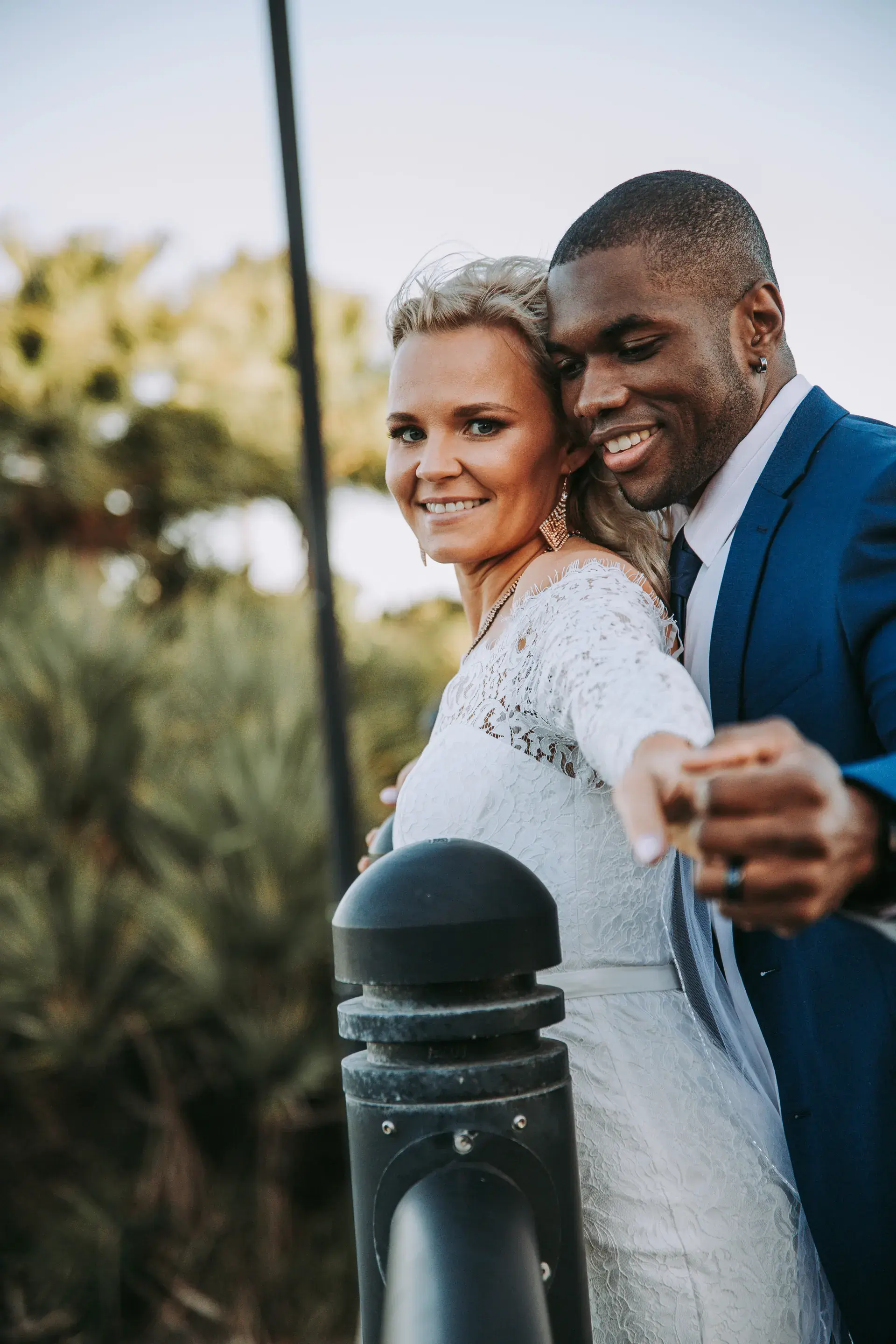
Walking frames work for four reasons at once. Your weight shifts, so you are never locked into one stance. Your arms have a job. Your face turns toward whoever you are walking with. And there is distance between you and the camera, which most self-conscious people find easier than a lens two metres from their face.
A few things make them work better:
- Walk slower than feels right. Normal walking pace looks hurried in a still frame.
- Walk closer together than feels right. Camera compression opens up a gap that does not look that wide to you.
- Hold hands, or an arm. It gives you a physical connection to think about instead of your posture.
- Talk while you walk. About anything. What you are going to eat, who is already drunk, whether the shoes were a mistake.
- Expect to do it three or four times. Nobody gets it on the first pass, and the third pass is where you stop performing it.
The same logic covers walking up steps, turning a corner, sitting down, standing up, adjusting a jacket, spinning once. Anything with a beginning and an end.
Give your hands somewhere to go
"What do I do with my hands" is the single most common question, and the answer is never "nothing". Hands need a destination.
- A hand on your partner's chest, lapel or waist.
- Both hands holding one of theirs.
- One hand in a pocket, thumb out. It creates a gap between the arm and the body, which is what stops an arm reading as flat.
- Fingers relaxed rather than gripping. Tension shows in knuckles before it shows anywhere else.
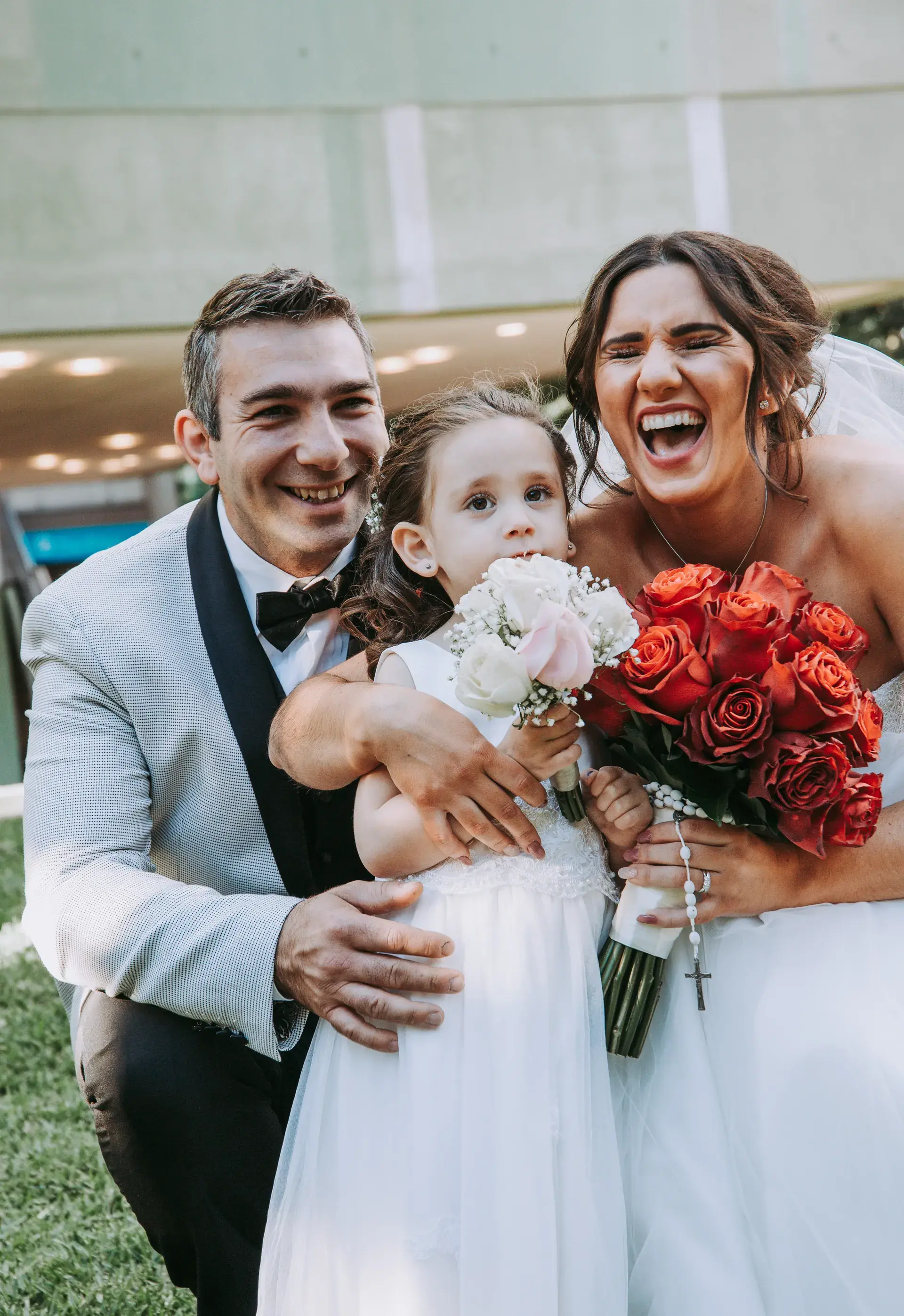
If you are holding a bouquet, hold it low, at about hip height and slightly to one side. Held up at the chest it hides the front of the dress and pushes both elbows out sideways, which is the exact shape everyone is trying to avoid.
Talk to each other, not to the lens
A large share of the frames from a good portrait set have neither of you looking at the camera. That is not the photographer being arty. It is the fastest route to an expression that is actually yours.
Look at each other, at your hands, at something across the park, or at nothing. The camera-facing frames come later, once you have both forgotten to be careful, and there are always fewer of them than couples expect.
Laughter is the same. It cannot be requested. It can be caused, usually by one of you saying something to the other, and a photographer who has been at this a while will hand you a subject rather than ask for the laugh.
The small mechanical things that genuinely help
None of this is about posing. It is about six or seven habits that stop a body reading as stiff.
Weight on the back foot. Standing square with your weight evenly split reads as a passport photograph. Shift it onto the back foot and let the front knee soften.
Turn off square. Point your feet and shoulders about forty-five degrees away from the camera, then bring your face back toward it. Straight-on is the least flattering angle for almost everyone.
Chin forward, then slightly down. It feels ridiculous and it is the difference between a defined jaw and none. You will not look like a turtle. You will look like yourself, which is the point.
Breathe out. Most stiff frames are somebody holding their breath. A long exhale drops the shoulders on its own, so you do not have to remember to.
Shoulders back once, then forget them. Actively holding a posture for four minutes looks exactly like actively holding a posture.
Do not check the back of the camera. Looking at a photograph of yourself mid-session is the fastest way to become self-conscious again, and the frame you are looking at is unedited.
What the direction actually sounds like
Worth setting expectations, because "posing tips" implies somebody standing behind a tripod arranging your fingers, and that is not how this works.
Coverage is one photographer, working quietly, and the day is photographed as it happens rather than staged. The direction is short and there is not much of it: where to walk, roughly where to stop, which way the light is, and something to talk about while you get there. The portrait set and the family groups are the only parts of the day that involve being told anything at all. The ceremony, the speeches and the dance floor are documented, not arranged.
One consequence of a solo photographer that self-conscious couples tend to like: you are only ever being watched from one direction. There is no second camera on your other side, and no one is circling.
Two things that help more than any tip
Get away from the guests. Being photographed in front of eighty people who are also watching is a completely different experience from being photographed with nobody else there. Ten minutes around a corner, out of sight, will do more for how you look than every piece of advice above. Ask for it.
Give the light time. The last ninety minutes before sunset are easy light, and easy light is forgiving of everything. Sunset in Brisbane moves by nearly two hours across the year, so the month-by-month table is worth checking before the run sheet is locked, not after.
Say it out loud beforehand
Tell whoever is photographing you that you find this hard. Every wedding package includes a consultation by phone, and this is a better use of that call than confirming the venue address.
It does not change how much portrait time the day has. It changes how that time is spent: more movement, fewer static setups, more distance, and the two of you left to talk to each other for longer than feels efficient. If you are still working out the shape of the day, the coverage options start at one hour, and you can send through your date and venue to talk it through.