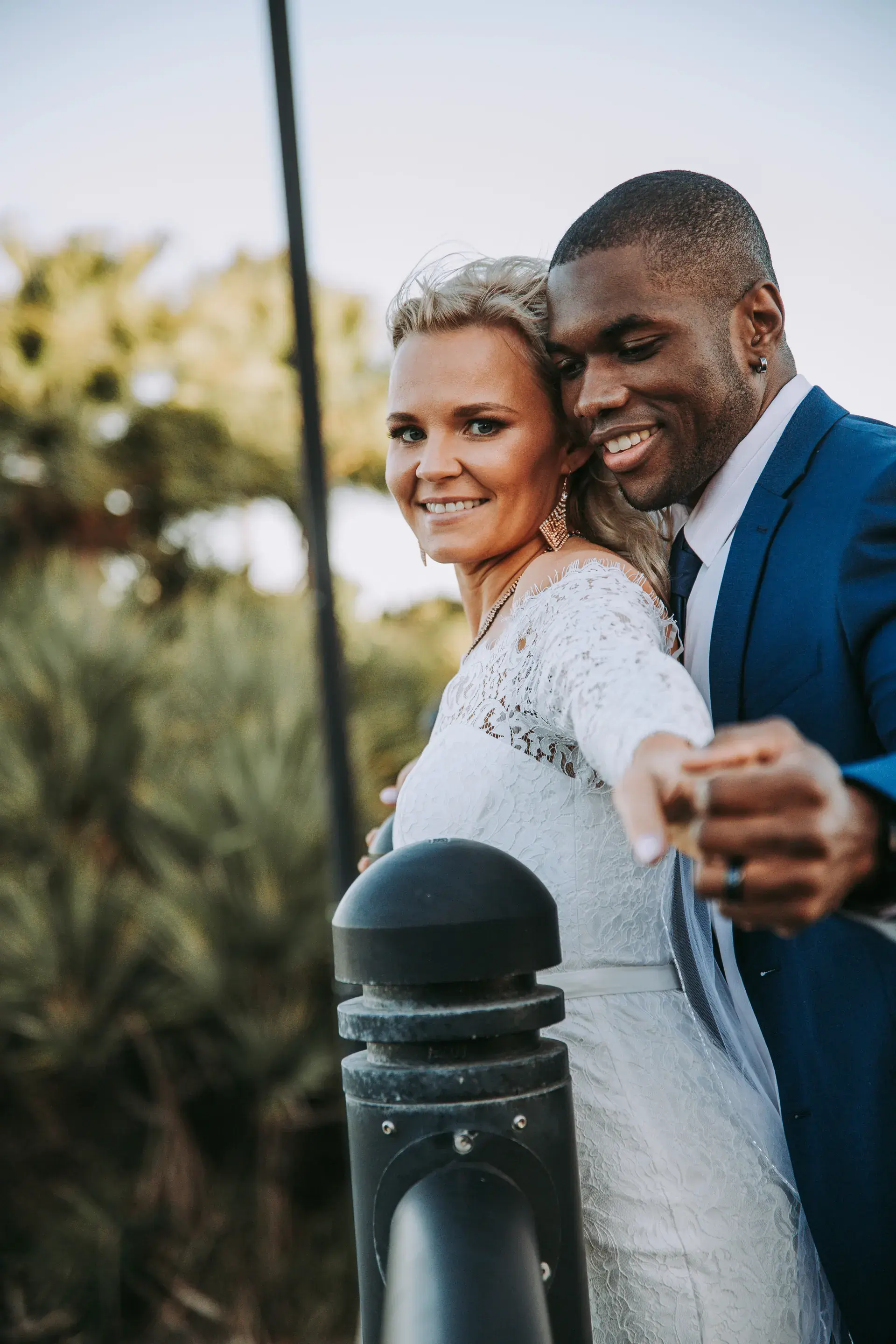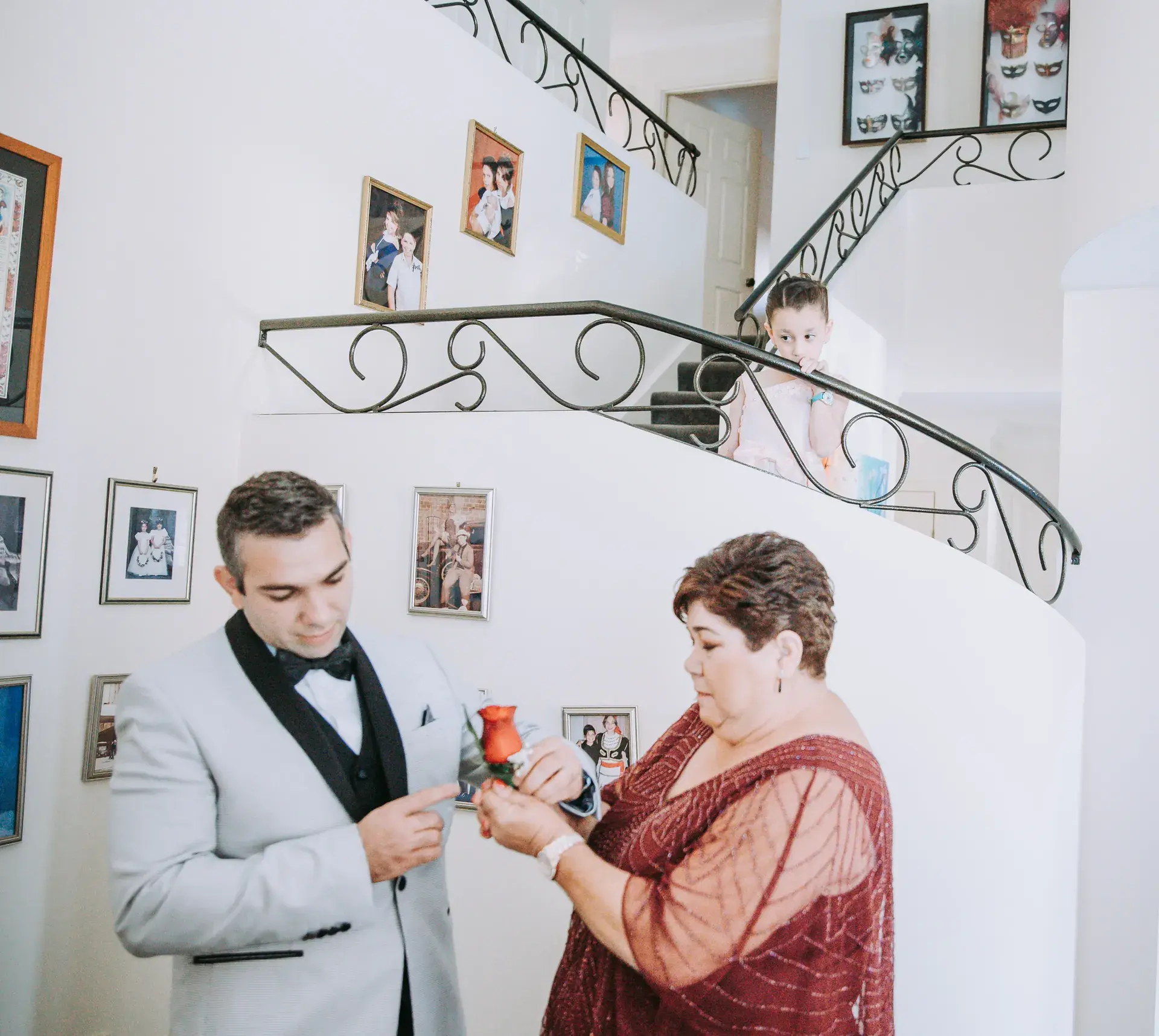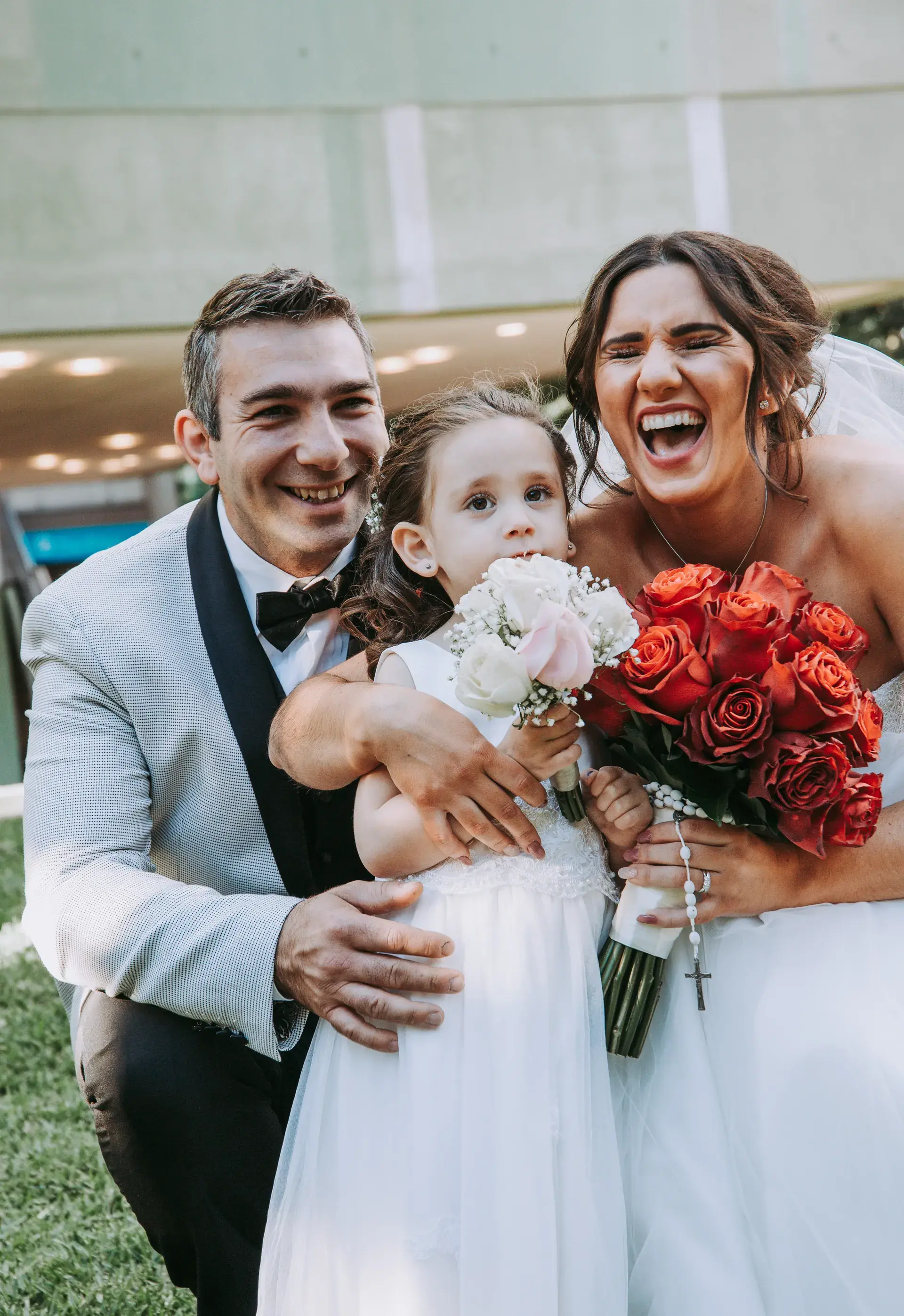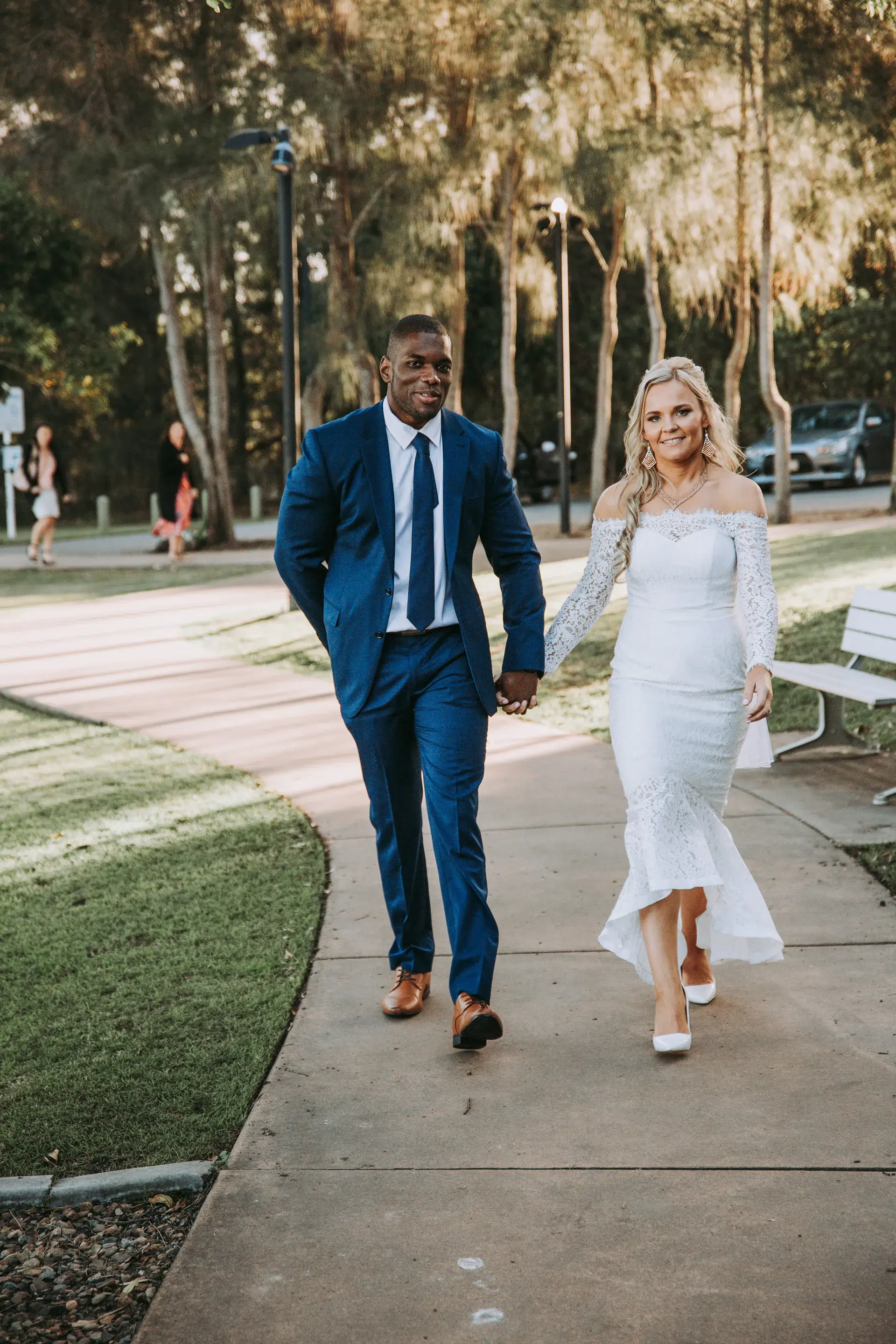
Your images arrive within four weeks of the wedding: full resolution, on USB, never watermarked, with an online gallery to look through. Then comes a step most couples do not see coming. The photo book is built from images you choose, and nobody has ever taught you how to do that.
Almost everyone starts the same way. Open the gallery, work through it, mark the ones you like. It is the obvious method and it produces a bad book.
What you get is six versions of the same portrait, because that was the best light of the day and every frame in the run is good. The ceremony is barely there, because ceremony photographs are largely of other people looking at you and nobody marks a picture of their uncle. The reception is one image taken in the first ten minutes, before anybody had started enjoying themselves.
None of those choices is wrong on its own. The problem is that a book is not a collection of your favourite photographs. It is an account of a day, and it has to hold together for someone who was not there.
Three passes fixes it. Do them in that order, and do not merge them.
Pass one: the beats, before the pictures
Before you open the gallery, write the day out in ten or twelve lines. Not photographs. Events.
Getting ready. Arriving. The room before anyone sat down. Walking in. The vows. The ring. Walking back out. The people who came. The family groups. The portraits. The speeches. The first dance. The end of it.
Then go and find one image for each line. Not the best one. The one that says the thing happened. A slightly ordinary photograph of your grandmother laughing during the speeches is doing work that no portrait of the two of you can do, and it will be doing that work in forty years when everything else in the book has become familiar.
This pass is dull and it is the whole trick. When it is finished you have a spine, and every later decision is about hanging things on it rather than assembling a pile.
If you booked one hour of coverage rather than a full day, the spine is shorter. That is not a lesser book, it is a chapter, and a chapter with a beginning and an end reads better than a highlights reel with neither.
Pass two: the ones that earn a page
Now be greedy. Go back through and mark the frames you would put on a wall, print large, or send to someone just because.
Before you do it, get the number. Ask how many images the book runs to and choose against that figure rather than choosing freely and cutting later. Choosing to a number is a completely different job from choosing without one, and it is a much easier job. Most people can rank fifty images against sixty slots. Almost nobody can rank three hundred against nothing.
Keep the two passes visibly separate — different lists, different documents, whatever suits you. The spine is not negotiable. The standouts are.
Pass three: cut the near-duplicates
Photographs are made in runs. Something good starts happening, the shutter goes ten or fifteen times, and the whole run survives editing because every frame in it is fine. That is where the six identical portraits come from.
From each run, keep one.
Two frames of the same moment can both stay if they do genuinely different jobs: one wide enough to show where you were, one close enough to show a face. If the only difference between them is which way a head is turned, that is one photograph and you have marked it twice.
The test that settles most arguments: cover the faces. If the two images still look the same with the faces hidden, they are the same photograph, and the one you keep is the one where the hands are right. Hands give a moment away faster than expressions do.
The one you love, and the one that carries
There will be photographs you cannot cut and cannot defend.
It is out of focus, or someone is blinking, or it is a picture of the back of a head. You love it because you know what was being said, or what had just happened, or who was standing off to the left. The photograph is not carrying the feeling. It is unlocking a feeling you already have. Hand it to someone who was not there and it is a person standing near a table.
Then there are the other ones — the frames that do the work on their own, that a stranger stops on without being told anything.
Both belong in a book. Not in the same way. The photographs that carry on their own open sections and take full pages, because they can hold a page. The private ones go in small, in a group, in sequence, where they are supported by everything around them and where they will ambush you every time.
Keep them. Just stop asking them to do a job they cannot do.
Two people choosing one book
Do the passes separately, then compare. It takes longer and it is worth it, because doing it together means one of you is choosing and the other is agreeing.
Where you disagree, the tiebreaker that settles it: the person who is not in the frame decides. You are a poor judge of a photograph of yourself. You are looking at your chin. Everyone else is looking at the moment.
Sending the list back
Send filenames, in the order you want them, grouped under the beats from pass one. That is a book someone can lay out. A list of two hundred numbers in gallery order is a pile someone has to interpret, and interpretation is where books go wrong.
Keep it chronological unless you have a reason not to. The day already had a shape. The book does not need to invent one.
And leave the choosing a fortnight, not an evening. The images you mark the night the gallery lands are the ones you remember. The ones you find on the second pass, a week later, are usually the ones that end up mattering.
Coverage runs from one hour at $698 to a full twelve-hour day at $2,300, and every package includes the consultation, the edited images and the gallery the book is chosen from — all six are listed on the pricing page, with what each one covers on the weddings page. If you are still planning the day rather than the book, how many photo locations fit into one Brisbane wedding day is the more useful thing to read first. Questions about your own gallery go through the contact page.