By the time the first guest walks in, the decisions that determine whether your gallery is any good have already been made. Most of them were made in an email a fortnight earlier.
This is what actually happens around an event booking, mostly so you know which parts are yours.
Before the date
We ask for four things, and none of them is difficult to send.
The run sheet. Not the invitation. The internal one, with clock times against every item. It tells the photographer when to be at the front of the room and when there is a gap long enough to set up a group photograph. It is also the single best predictor of whether the hours you have booked are the right number, which is a separate question worth working through properly.
Who matters. Speakers by name. Sponsors who paid for visible logos. The two board members whose absence from the gallery will be noticed. A photographer who does not know these people photographs the room evenly and misses all of them.
The venue. Address, load-in point, parking, and whether there is a room to leave a bag in. If you know the space is dark, or that the stage is backlit, or that the ceiling is black, say so. Those three facts change what gets packed.
Somebody on site. One name and mobile number for a person who will be there and can identify a face. This is worth more than any other item on the list.
The hour before
The photographer arrives about an hour early, and it is the most productive hour of the booking.
The empty room only exists once. Styling, signage, table settings, the sponsor stands, the branded backdrop before anybody has leaned on it. These are the frames your venue, your suppliers and your sponsors will all ask for later, and there is no way to recover them at 8:00 pm.
The rest of the hour is spent on things nobody sees: metering the room, setting a white balance against whatever the venue's lighting actually is, finding where the power outlets are, working out where to stand during the speeches so the photographer is not in the line of sight of half the audience, and confirming with the AV operator when the house lights change.
During the program
Corporate events and social events pull in different directions, and it helps to be clear about which one you are running.
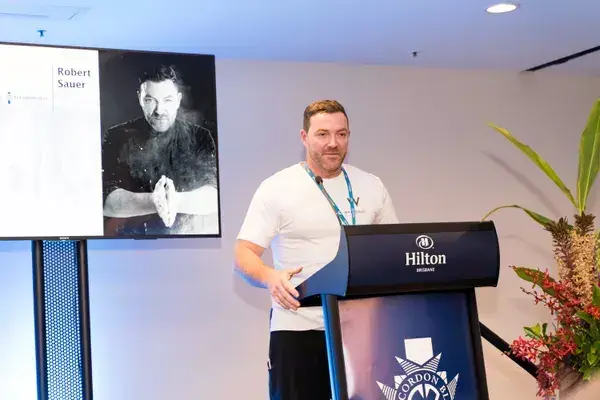
At a corporate function the fixed points are the ones that generate the images with a job to do: the keynote from the front and from the side, each award presentation, the handshake, the sponsor signage in a frame that includes people rather than an empty banner, and a set of genuine networking shots that do not look like a stock photograph. These have deadlines attached to them, because someone is publishing them.
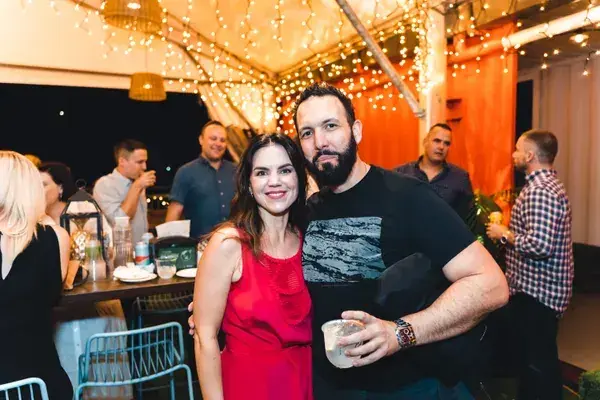
At a party or a celebration the priorities invert. Arrivals, the group shots people request on the night, the entertainment, and a long run of candid coverage where the photographer's main skill is being unremarkable. Anticipating a moment two seconds before it happens is most of the job.
Two practical constraints are worth naming, because both come up on the night.
Low light means a decision. Function rooms are dark, and there are only two ways through that. Fast lenses and high ISO preserve the atmosphere of the room and produce images that look like the evening felt. Flash produces cleaner files and can be bounced off a ceiling if there is one, but a black ceiling gives nothing back and the flash becomes obvious. Most nights use both, in different parts of the room. If you have a strong preference, say so before the event rather than during it.
Large groups take longer than you think. Twenty people need space to stand in, a background that is not a fire exit, height variation so the back row is visible, and about four minutes. Not thirty seconds between two agenda items. Nominate a time for it on the run sheet and nominate a person to gather everyone, because the photographer cannot do both.
One more thing worth asking any photographer, before the event and not after it: whether there is a backup camera body and duplicate cards. Events do not have a second take.
After the event
Culling comes first, and it is subtractive work. Every frame with a blink, a turned back or a missed focus goes. Then anything that duplicates a better version of the same moment. What survives is ordered along the timeline of the evening so the gallery reads the way the night ran, rather than the way the memory card filled up.
Editing is exposure, white balance and contrast first, then consistency. That second part is what separates a professional gallery from a folder of good photographs: the whole set has to look like one evening, not like six rooms with six different colour casts. Venue lighting rarely cooperates, and correcting it per image is most of the post-production time.
Delivery
A preview gallery lands the same week. That exists for one specific reason: your marketing team needs something to publish while the event is still current, and four weeks later it is history.
The full edit follows within four weeks, at high resolution, in an online gallery for viewing and downloading. Every package includes one photographer, the edited images and the gallery.
Payment is taken in full at booking, to hold the date.
The short version
Send the run sheet, name the people who matter, and give the photographer an hour before the doors open. That is close to the whole of your side of it, and it is the difference between coverage of an event and coverage of your event.